The areas of recent urban expansion and the south-east hill are the highlights of this route that winds between the Gocciadoro Park and the Villa Mersi Garden.
Not even a century ago, the plain around the Fersina was open countryside and the arches of the Valsugana Railway (1895) rose - isolated - over a typically agricultural landscape. Today the alluvial plain is completely occupied by the southern districts of the city and the strong urban expansion of the ‘60s-’80s also affected the Villazzano terrace and the first slopes of the Marzola.
However, there are still interesting ideas for a route immersed in greenery. It starts from Gocciadoro Park, which occupies the final section of the Salé valley and by established tradition is the true “naturalistic park” of the city. Between the two wars, kindergarten children were brought there for the end-of-year cherry picking. In the post-war period, “day colonies” were opened there.
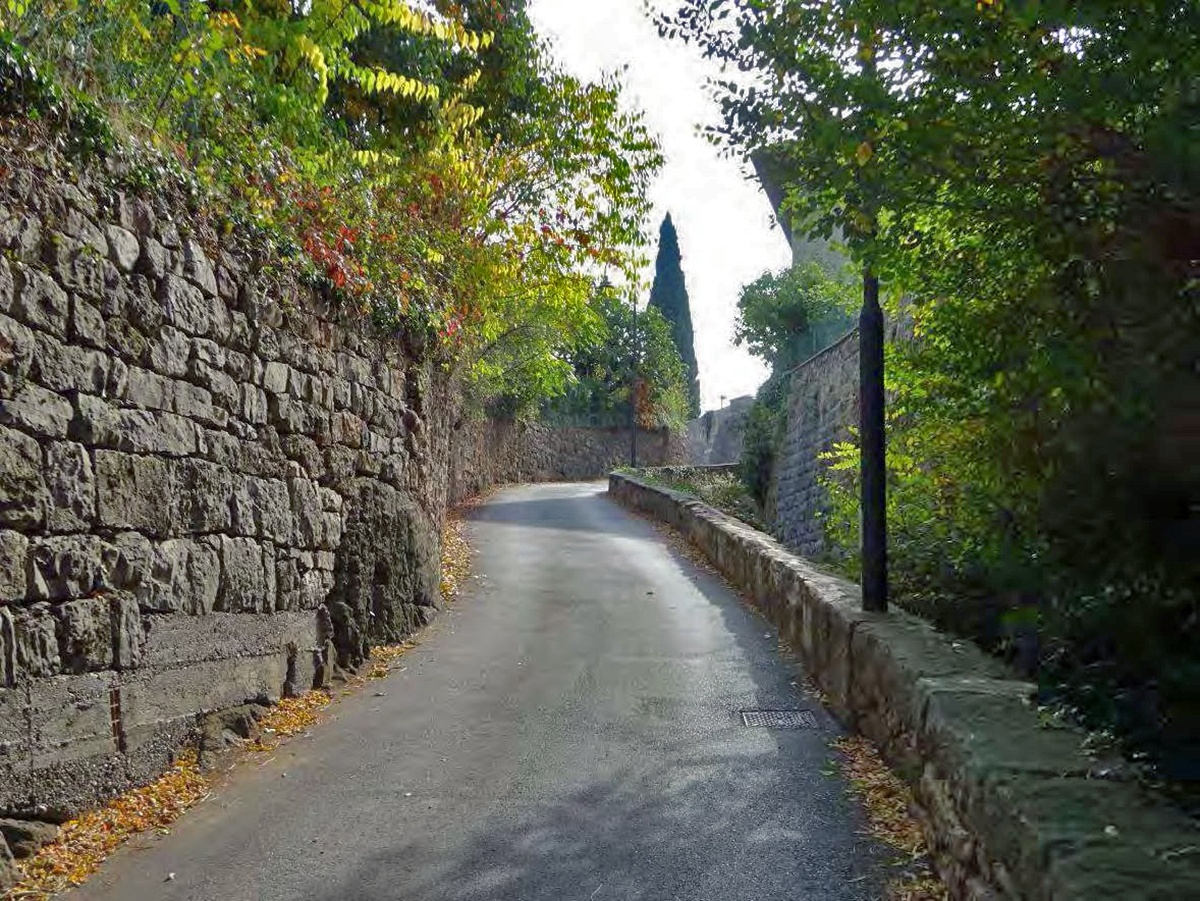
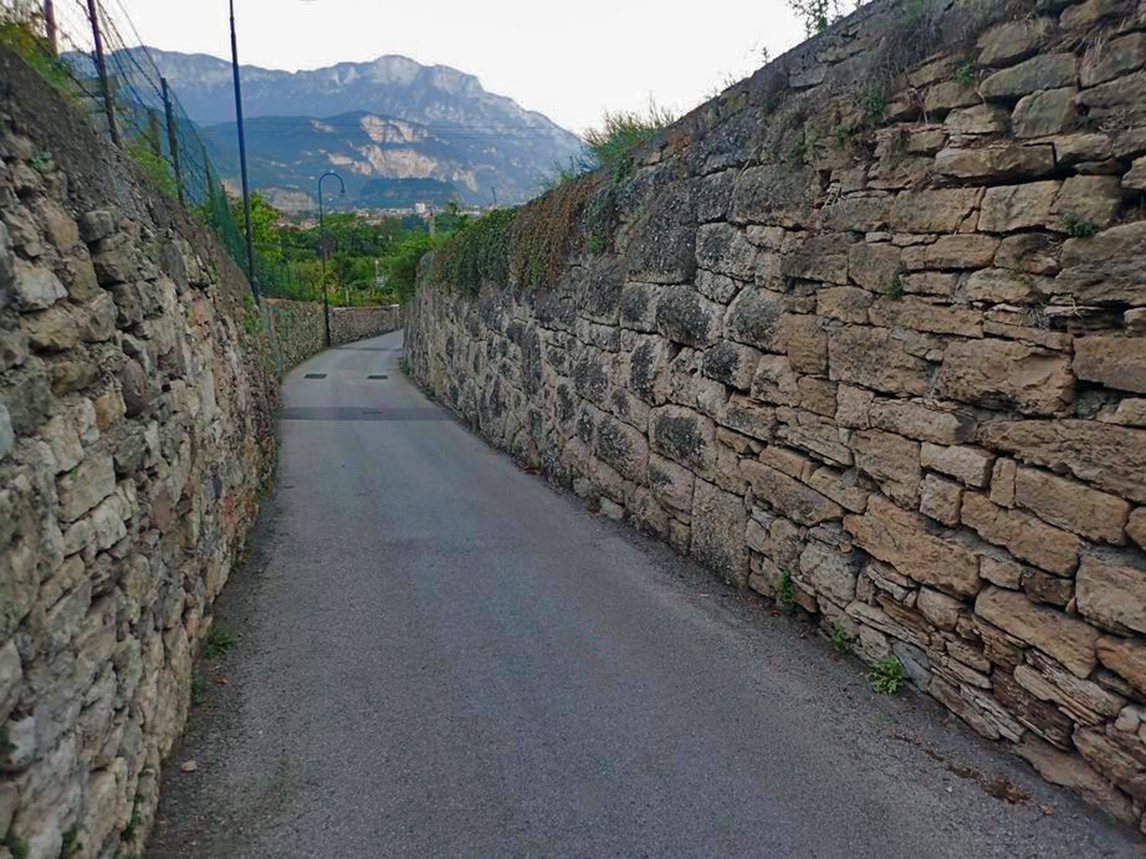
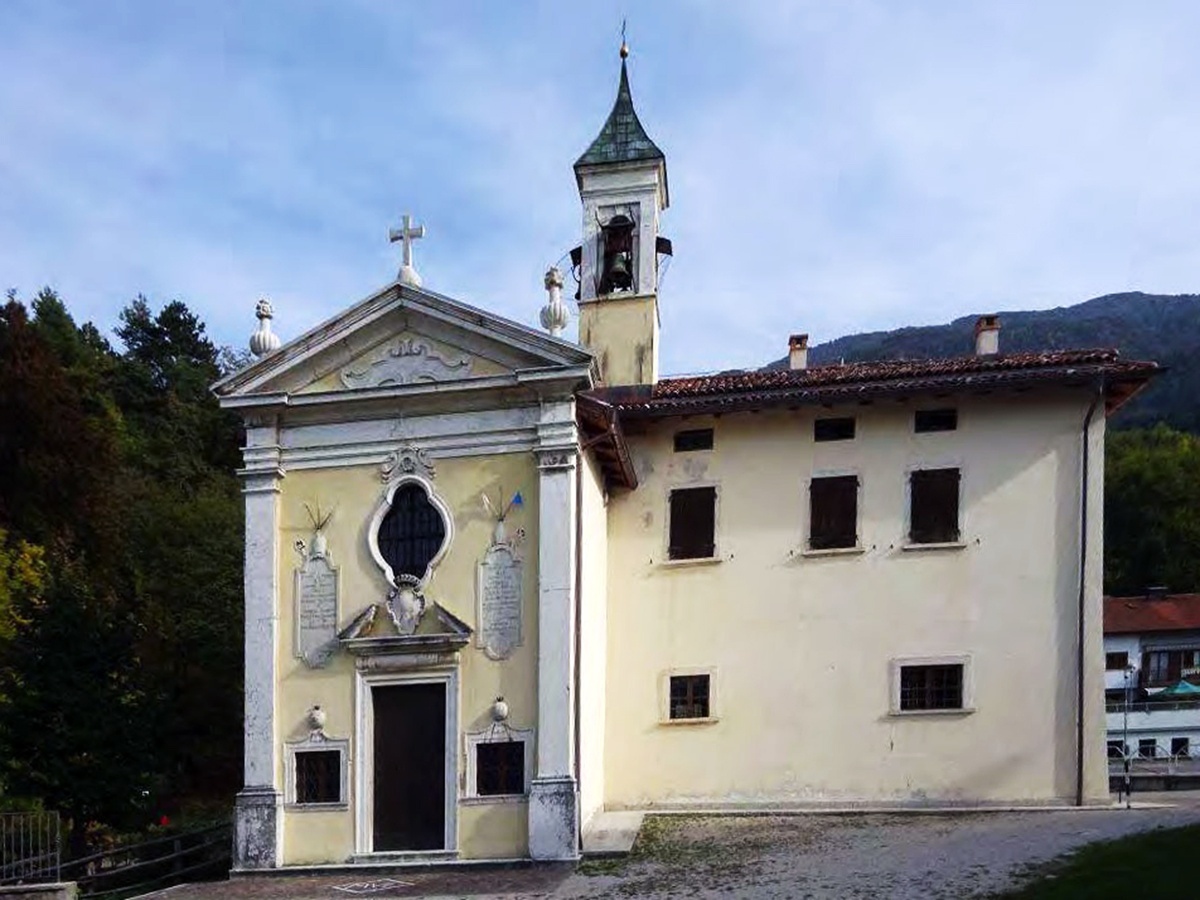
Starting the itinerary, you follow the ancient road of San Bartolameo, which passes next to the homonymous religious complex made up of church and cemetery. It is a very interesting nucleus due to its characteristics and location, whose origin is estimated before the 12th century.
The climb continues toward Villazzano, passing through stretches of countryside and residential areas, where 20th-century buildings blend seamlessly with small historic clusters, once isolated in the agricultural landscape. The route crosses the Villa Mersi Garden, an elegant example of noble residence in the Baroque style of the 18th century. The access avenue gently rises towards the villa’s main facade and culminates with a rising fountain. To the Baroque garden, restored and completely regenerated at the beginning of the 21st century, a romantic-style park was annexed in the last century, also made up of exotic plants.
Going further, you enter the Salita dei Molini, which recalls the past presence of grain mills and forges that used the water power of the Rio dei Mulini. The medieval urban layout is evident with the typical “stepped” aggregation, although the buildings show interventions and remodeling from the 16th century.
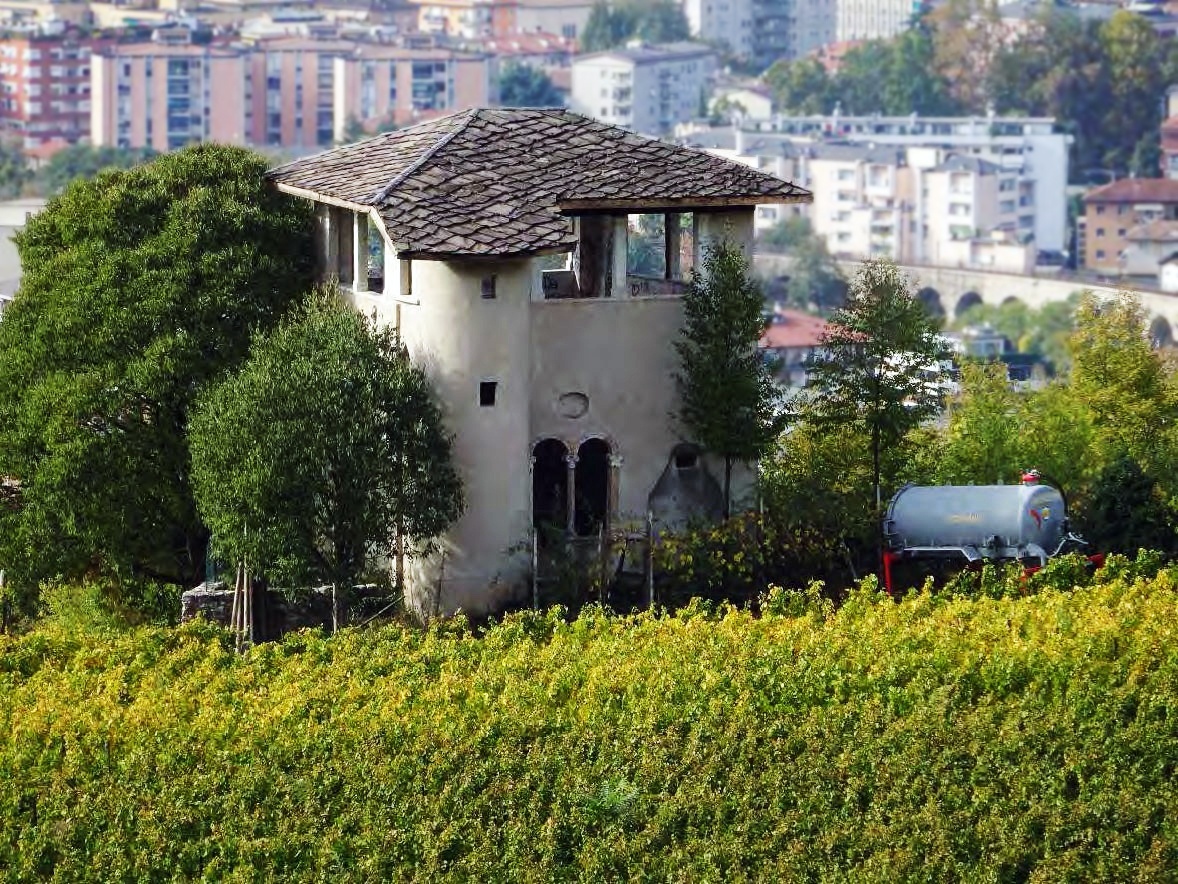
Also in this part of the hill there are abundant examples of refined and cultured architecture in the many country residences, erected by the wealthy bourgeoisie of the city at the turn of the 17th-18th centuries (Villa Ferrari, Villa Belfonte, Villa Tommasi).
A route that can be done anytime; due to exposure, the afternoon is preferable during the cold months and the morning in the spring and summer periods.