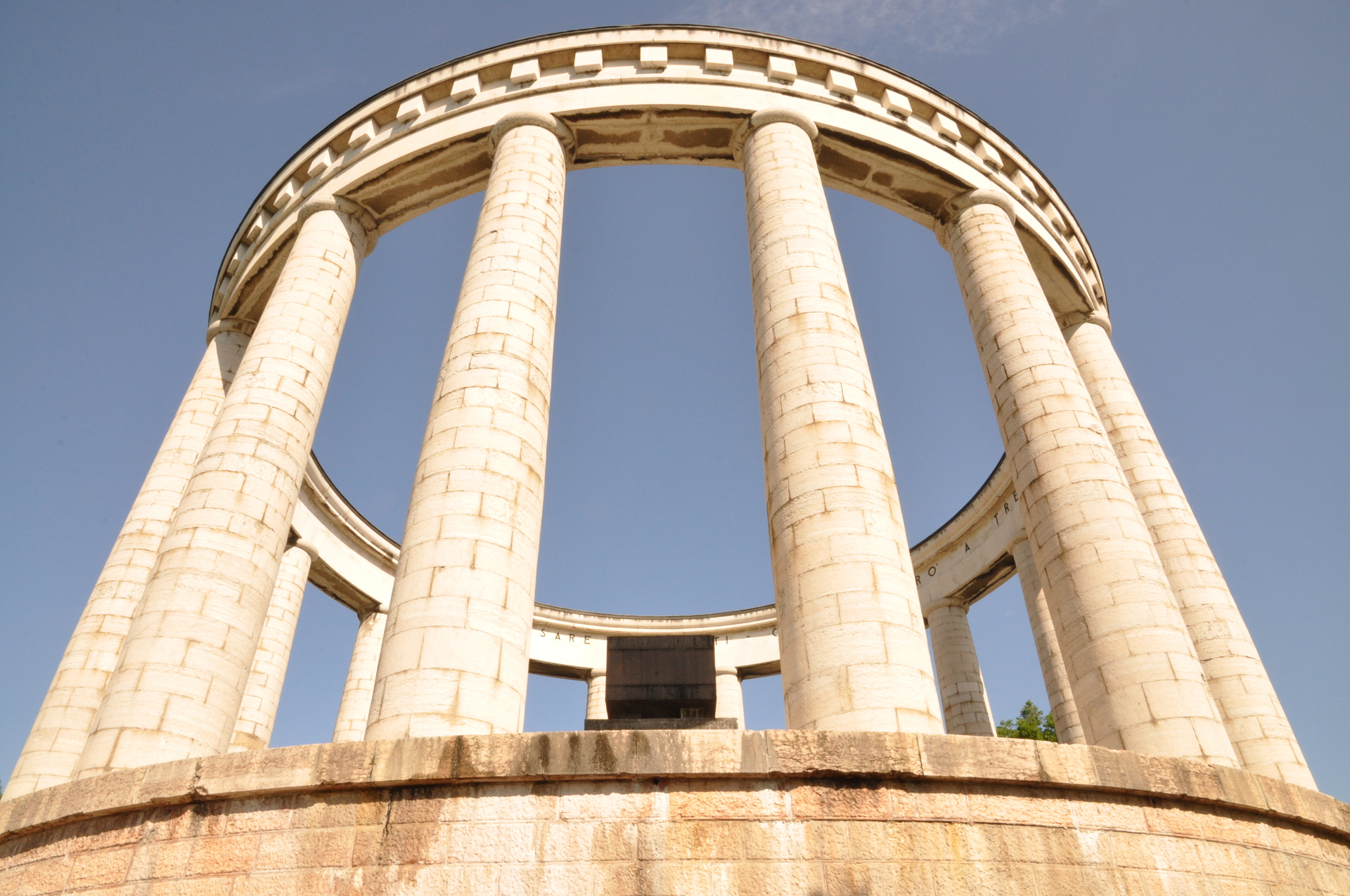
Mausoleum of Cesare Battisti
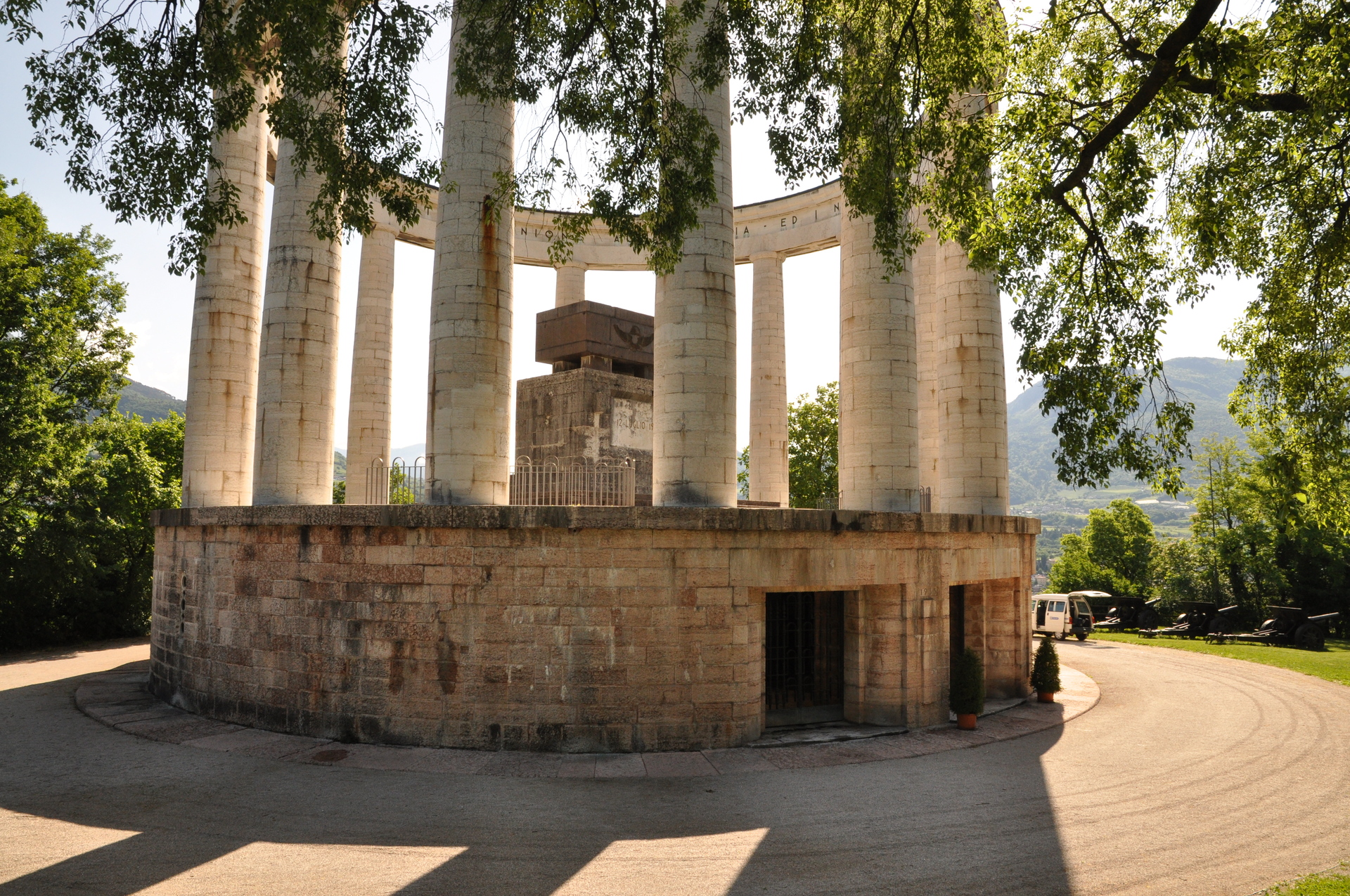
Solemn and of considerable scenic impact, the Mausoleum dedicated to the man who fought for the Italian identity of Trento was built in 1935 by Ettore Fagioli, an architect from Verona.
The Mausoleum, with a circular shape borrowed from the classical world, is characterised by a skilful play of contrasts: full spaces and empty spaces, play of light and shadows and for the choice of materials, all coming from Trentino. The colonnade that stands on the main building is striking: sixteen columns, more than ten metres high, form a circular crown that houses, in the centre, the altar on which the large commemorative tomb area rests. Three large openings lead into the interior of the monument, where the cell guarding the ark with the remains of Battisti is located in the hypogeum.
Cesare Battisti
On the evening of 12 July 1916, Cesare Battisti died in the pit of the Castello del Buonconsiglio. Around him and Fabio Filzi there are dozens of soldiers watching the scene and many cameras that obsessively document the tragic moment of death. Austrian propaganda transforms Battisti into the symbol of Italian infidelity to the alliance that the Kingdom would betray by fighting alongside France and England against the Austro-Hungarian Empire. News of the death sentence against Battisti and Filzi is also beginning to arrive in Italy. The more the exceptional character of Battisti's death becomes clear, different from the anonymous one of the thousands of corpses that accumulate every day in the trenches, the more the interest of the Italian press grows. Extraordinarity is the premise for the transformation of the protagonist, who is no longer the real Cesare Battisti – with his contradictions and facets – but the "Myth of the Martyr". The strength that the symbol of Cesare Battisti assumed during the conflict does not fade after the end of the Great War and the annexation of Trentino and South Tyrol/South Tyrol to Italy. Trento and Trieste – the symbolic cities of the interventionist propaganda of 1915 – are now Italian in all respects: next to the great war cemeteries on the Karst, even the grave of the Castello del Buonconsiglio, now renamed the Martyrs, becomes a famous destination. The authorities who visit the city, the veterans, the schoolchildren on trips pass through on a lay pilgrimage. On 26 May 1935 the mausoleum was inaugurated, which has since housed the remains of Cesare Battisti on the Trento estate. Mussolini does not participate in thatevent, he visits the monument designed by Ernesto Fagiuoli in the summer.
OPENING HOURS
the mausoleum is open at the same time as the park
- 9 - 19.30 during the summer
- 9 - 16.30 in winter